
No-Gatekeeping Boxing FAQ
Your Questions. Real Talk Answers. No Judgment.
Going to a boxing gym for the first time is intimidating. You have a million questions, but you don’t want to look “soft” or “uneducated” asking the veterans in the gym. This is your spot. I’ve compiled the most common, fundamental, and sometimes “embarrassing” questions I hear from beginners. Here is the Official standard of advice.
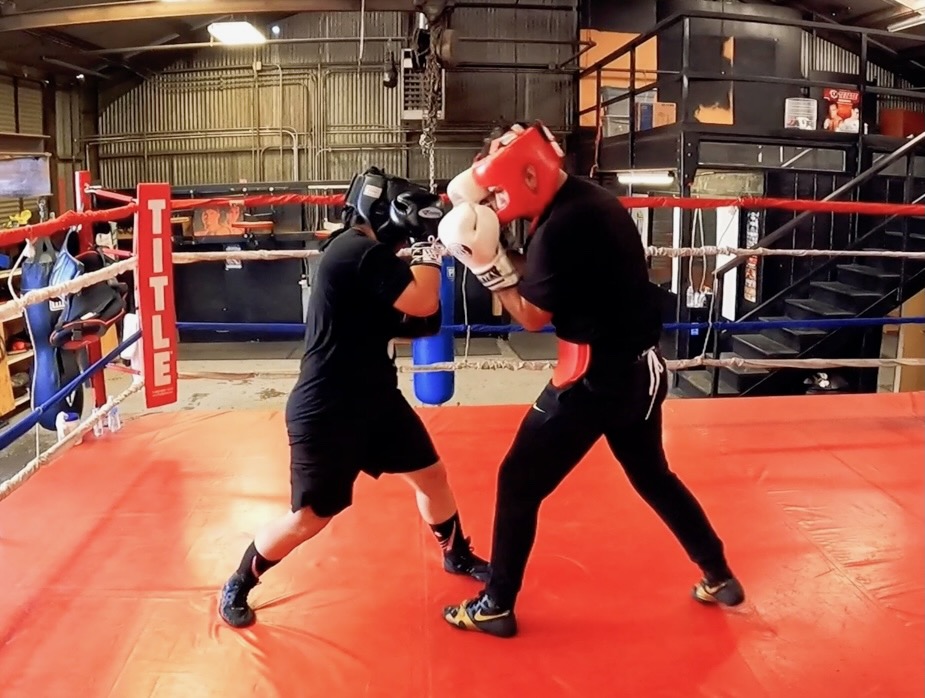
Is my partner going too hard, or am I just not used to this?
This is a crucial distinction. Beginners often confuse the shock of being hit with the intensity of the punch. If you’ve never been punched before, a 10% shot can feel like a 100% bomb because your central nervous system isn’t calibrated yet.
Here is the “Real Talk” rewrite for that first FAQ:
If you are brand new, even a light tap can feel like a car crash. The reality is that your brain and body haven’t calibrated the sensation of being punched yet. Most of the time, it’s not that your partner is being a bully—it’s just that you are experiencing a sensory overload.
The Adjustment Process: Boxing is a psychological and physical adjustment. You shouldn’t be thrown into the deep end on Day 1. The Official way to build your “chin” and your composure is through a controlled progression supervised by a coach:
Defense-Only Drills: Your partner throws specific, light punches, and you focus only on blocking or slipping. This removes the “fight” element and lets you get comfortable with leather touching your headgear.
Gradual Offense: Once you stop flinching, you add restricted offense. You might throw 1 punch for every 3 they throw.
Light Technical Sparring: Both fighters move at 10–20% speed and power. The goal is “tag,” not “takedown.”
Progressive Intensity: Over weeks and months, you slowly turn up the volume as your defense improves and your “poker face” becomes natural.
The Role of the Coach: A supervised environment is mandatory. A coach’s job is to ensure the partner is playing their role correctly and that you are being pushed—but not overwhelmed. If it feels “too hard,” it’s usually a sign that you need to step back a level in the progression until your eyes and your defense catch up. It’s a skill you build, not a test you pass on the first try.
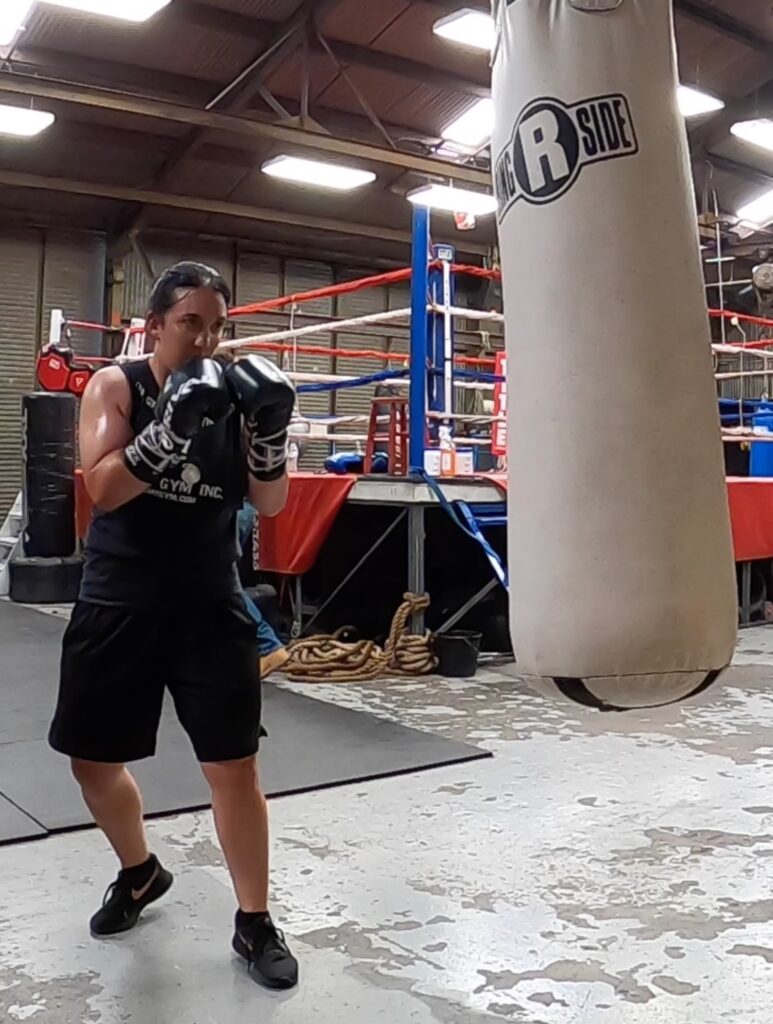
What size gloves do I actually need?
Gear is the one thing you can control as a beginner, but most people do it wrong. You need two pairs of gloves.
12oz – 14oz (Bag Gloves): These are dense and compact, designed for heavy bag work and pad work. The padding is firm to protect your knuckles from repeated, high-force impact.
16oz (Sparring Gloves): These are mandatory for anyone who wants to spar. They are larger, softer, and have “pillowy” padding. This isn’t to protect your hands; it’s to protect your partner’s head.
No Gimmicks” Rule: Never use damaged gloves or your 12oz bag gloves for sparring. It’s a fast way to get kicked out of a real gym.
Why do my hands hurt after bag work?
Knuckle and wrist pain is the #1 sign of improper technique or improper gear.
Improper Wraps: Are you actually wrapping your hands? A $10 pair of 180-inch hand wraps is the cheapest insurance policy in the sport. You need them to create a solid “cast” for your wrist and cushion your knuckles.
Bad Landing: A proper hook lands with the two big knuckles of your index and middle finger. If you land with your pinky knuckle, you will break it.
Worn-Out Gloves: If your gloves are ancient, the padding is dead. Your knuckles are just hitting the heavy bag with nothing but a thin layer of leather in between.
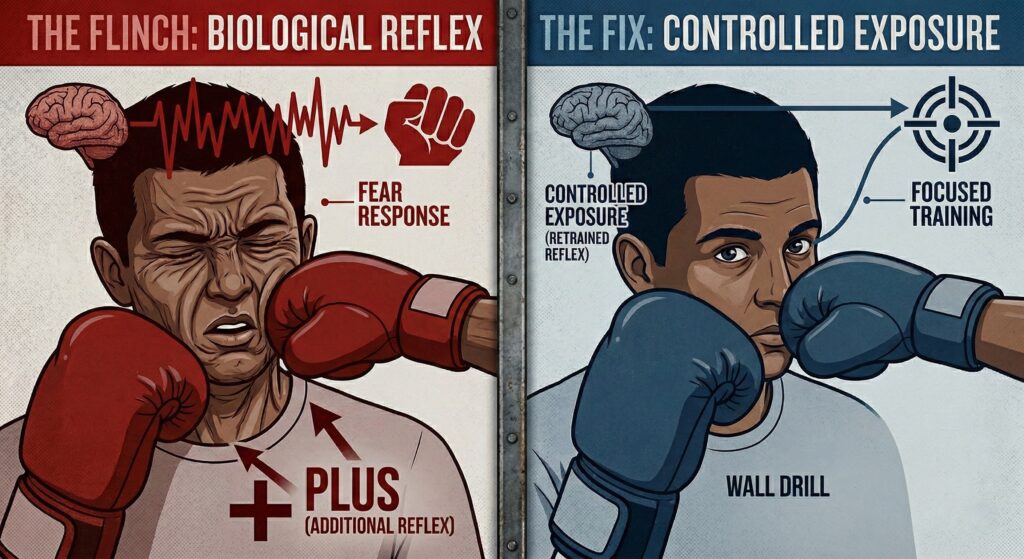
I keep flinching and closing my eyes when punches come. Is something wrong with me?
No. You are fighting biology.
It’s not weakness; it’s millions of years of evolution. Your brain is hardwired to protect your vision from incoming threats by closing your eyes. Every single beginner does this. You cannot “tough guy” your way out of a biological reflex.
The Fix: Exposure Therapy. You have to retrain your brain’s threat detection system to override the flinch. The best way to do this is with controlled, slow-motion defensive drills where you know you aren’t going to get hurt.
The Wall Drill: Stand with your back to a wall. Your partner throws slow, light, looping punches at your head. Your only job is to keep your eyes wide open and watch the logo on their glove all the way in until it lightly touches your guard.
The Goal: You are teaching your nervous system that “glove coming toward face ≠ immediate danger.” Once your brain believes it’s safe, the eyes stay open—and that’s when real defense begins.
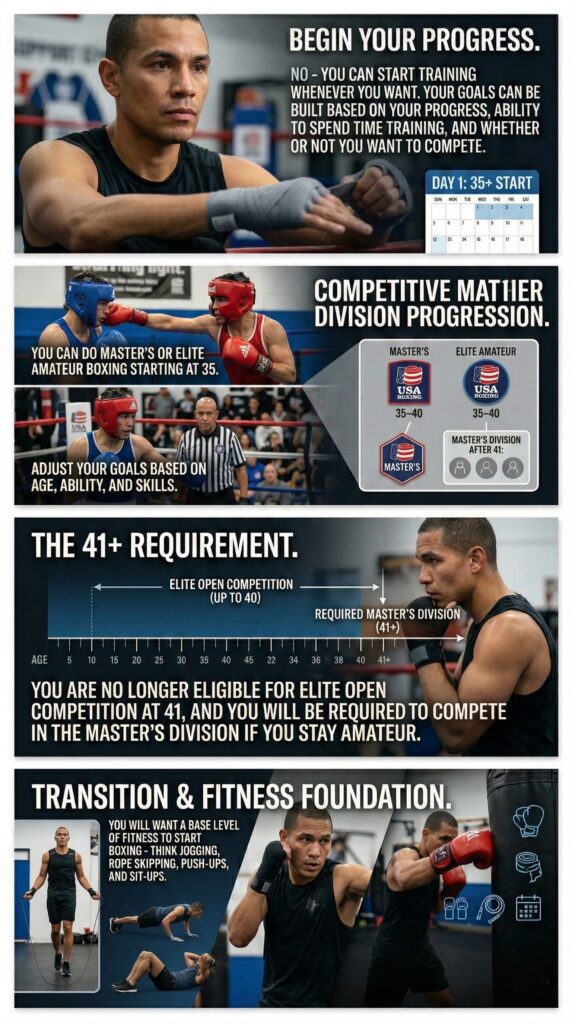
I’m 35+ / I’m out of shape. Am I too old to start?
NO – you can start training whenever you want. Your goals can be built based on your progress, ability to spend time training, and whether or not you want to compete. You can do Master’s or Elite Amateur boxing starting at 35. You are no longer eligible the Elite open competition at 41, and you will be required to compete in the Masters division if you stay amateur. You can turn pro if this suits your goals at any point, although it’s less common after your late 30’s or 40’s. Adjust your goals based on age, ability, and skills. You will want a base level of fitness to start boxing – think jogging, rope skipping, push-ups, and sit-ups. You don’t have to be boxing fit, but you should be fit
Have a boxing question?
Drop it in the hotline form. No names, no judgment. I’ll answer it in my next article, video, or update to “The Corner.” Let’s make sure you have the right info.